About Martha Gellhorn
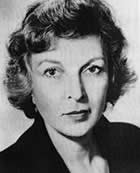
Martha Gellhorn was one of the most experienced and distinguished journalists of the 20 th century. In the 1930s she travelled across the US for the Roosevelt Administration reporting on the effects of the Depression. Later she used her research for The Trouble I’ve Seen, a book of four novellas about the American poor. With world war looming, she chronicled the rise of fascism in Europe for Collier’s magazine: her reports on the Spanish Civil War are among the best dispatches from Spain at the time.


After 1939 she covered several key military confrontations in Western Europe, including Monte Cassino and the Battle of the Bulge. In June 1944, she stowed away on a hospital ship to report on the D-Day landings and entered Dachau with American troops in May 1945. In 1966 she covered the war in Vietnam with a series of six dispatches for The Guardian. The authorities later refused her accreditation to work in South Vietnam. In the 1980s she travelled in Central America, writing about the wars in El Salvador and Nicaragua. A few years later she published a report from Panama in the wake of the US invasion. Her last long piece of reportage, written shortly before she died, was about street children in Brazil. She was the author of several novels and collections of short stories. Her war reportage can be read in The Face of War . The View from the Ground, a collection of her other journalism, was published in 1988.


The award is made by the trustees of the Martha Gellhorn Prize: James Fox, Jeremy Harding, John Hatt, Cynthia Kee, Sandy and Shirlee Matthews and John Pilger.
The 2008 winner will receive £5000. The 2007 award was shared by two independent journalists, Dahr Jamail and Mohammed Omer. The 2006 award went to Hala Jaber of the Sunday Times and Michael Tierney of the Glasgow Herald. Previous winners include Robert Fisk (The Independent), Ghaith Abdul Ahad (The Guardian), Patrick Cockburn (The Independent), Chris McGreal (The Guardian), Geoffrey Lean (The Independent) and Nick Davies (The Guardian).